
DAY 14:

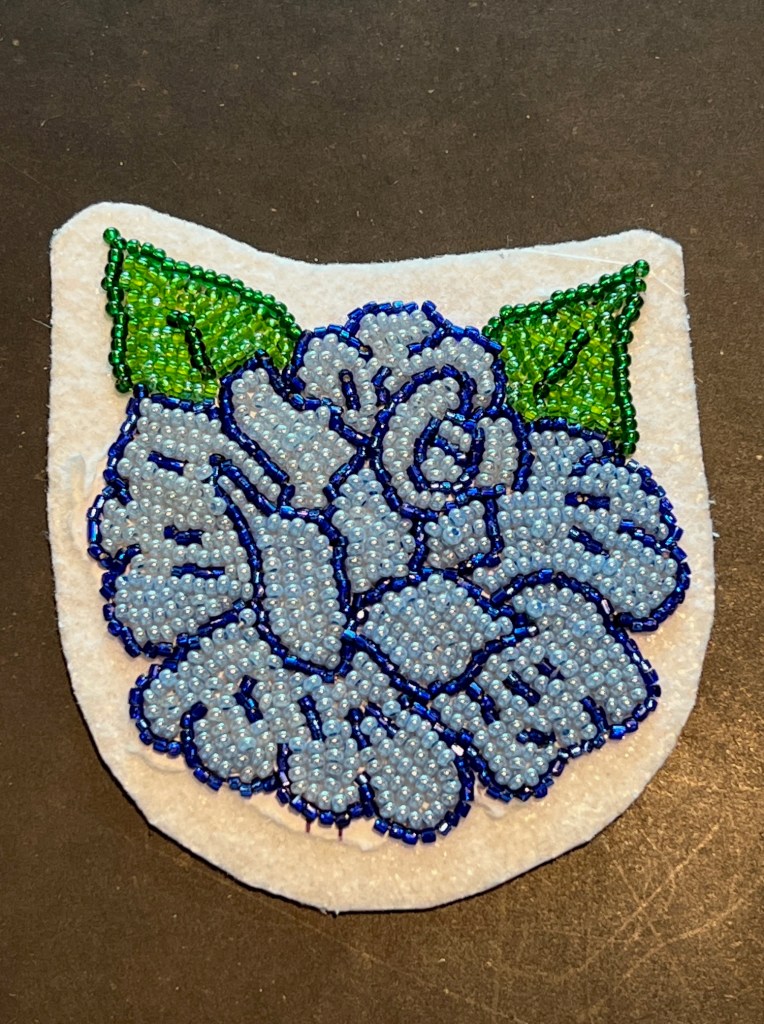
Today we stopped at Daku Cultural Centre visitor information center Dakwakada/ Haines Junction / Kluane National Park and Reserve. This was the most thorough and interesting and engaging visitor center that I have ever experienced. Experience is the perfect word because I have been in and seen many visitor centers that are collections of objects. This center was state of the art and put together with the passion of all those involved. According to a display, “Today Champagne & Aishihik First Nations and Kluane First Nation manage the park cooperatively with Parks Canada . This is a better park because First Nations people are on the land. We all share responsibility for taking care of the place our grandchildren and our great grandchildren’s grandchildren.” Decisions are made with all the stakeholders involved. The result is evident. Even those working the front desk are sincerely happy and express a strong connection to their roots. I had the pleasure of meeting Elaine Chun, a First Nation native, who is learning to do needlepoint; she has been influenced by the beautiful artistry that she has seen in her heritage. She was working on this beautiful blue flower during her free time that she graciously shared with me.
The research techniques have also been modified according to certain traditional values as the speaker in this short video shares. I was genuinely impressed with how well all these facets work cohesively and together with mutual respect for the other. The result is evident because it is working for them here in the Yukon Territory. When all parties involved feel respected and heard, you see all the positive aspects show up in policies, displays, and the work environment.
If you are ever in the Yukon, take a couple of hours or longer and, go through and listen to the displays and talk to the people who work there. Elaine encouraged me to go next door and visit the display of native clothing designed by high school students and their families. These original designs were worn on their graduation day with each one demonstrating what clan they were from.
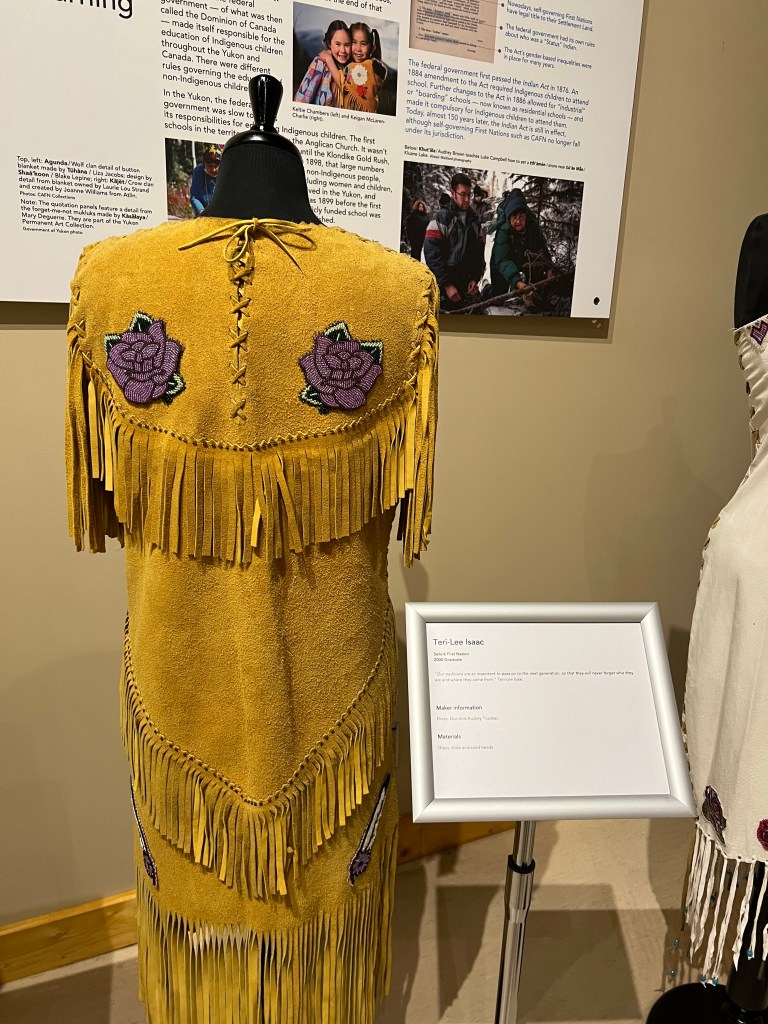
“Our traditions are so important to pass on to the next generation, so that they will never forget who they are and where they come from.” These were Teri-Lee Isaac’s words on the display by her dress. She credits Don and Audrey Trudeau as the dressmakers that used natural tan hide and seed beads for the purple flowers. The result is a unique display of pride in her culture.
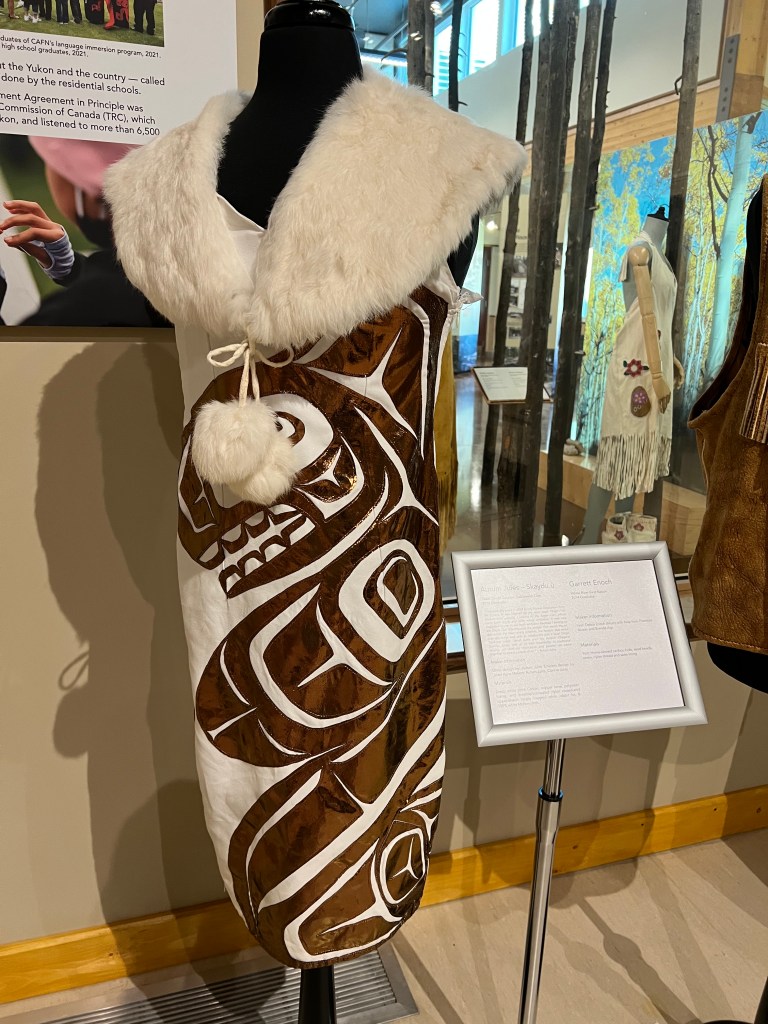
Here are some other beautiful outfits that were designed and worn by students. Their education system encompasses the whole students including their cultural background and artistic skills. “The whole Yukon is our school. In the past, we learned from our surroundings,” is emblazoned on a giant, black placard on a wall by these garments. As a teacher, I was drawn to the whole student form of education, and as a foreign language teacher, I understand the importance of culture and language and keeping them both vibrant and alive and passing it on to future generations.



In this area of the center, I also got to meet Erin and she was a bundle of joy and enthusiasm about the center and her culture in general. She was kind enough to introduce herself and count from 1- 10 so I could share it with my students. She explained to me the map that details the floor of the museum and the connection between all the clans. For her, history was real. And she made it come alive for me with her connections and stories,
Before visiting The center, we had stopped at Champagne, a small village a little off the highway. It is officially considered The Long Ago Peoples Place and First Nations heritage attraction. Originally, it was a trading post for the indigenous people, but when stampeders heading to the region in search of gold and riches and furs arrived in droves, this settlement grew. Legend has it that the settlement got its name after a successful venture, when the newly-arrived settlers celebrated by opening a bottle of Champagne. When wartime necessitated a road, more people arrived for this construction. As the army road grew so did the population. and with so many people poring in, so did disease.

Village of Champagne

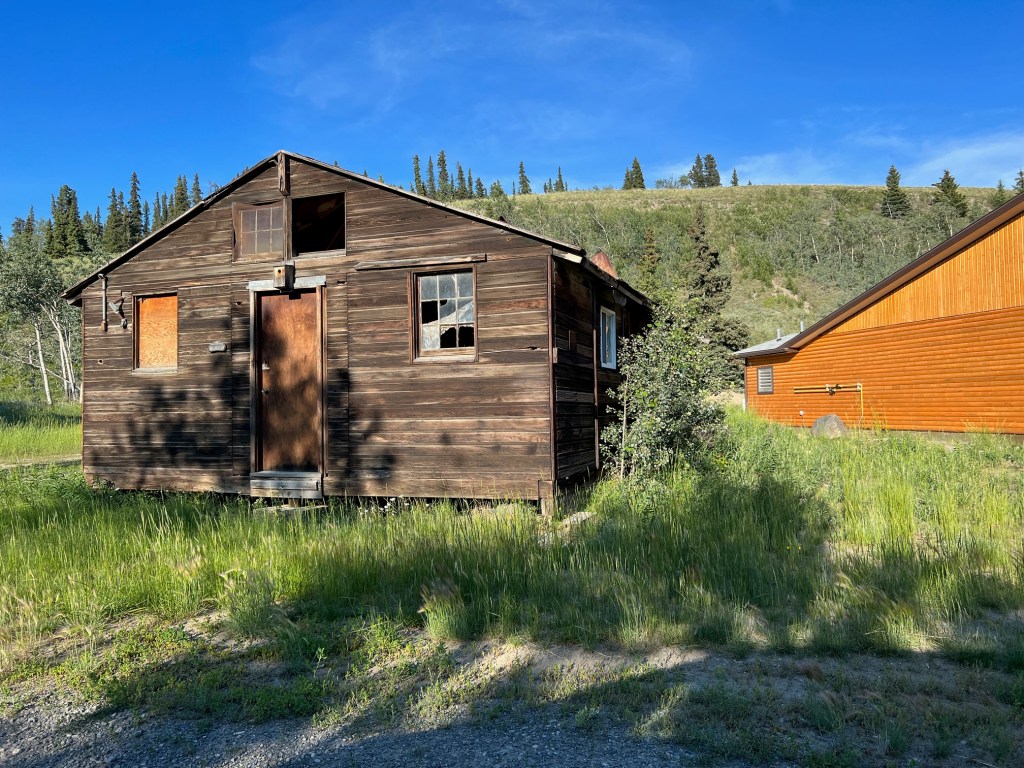

Illness almost wiped out the Indian community of Champagne. One family of 12 had 9 die during this time. After the war, many left to work in the big cities, such as, Whitehorse. Today, Champagne has a population of 25, and they are tied to the hosting of the Daku Cultural Center, as Erin pointed out to me.
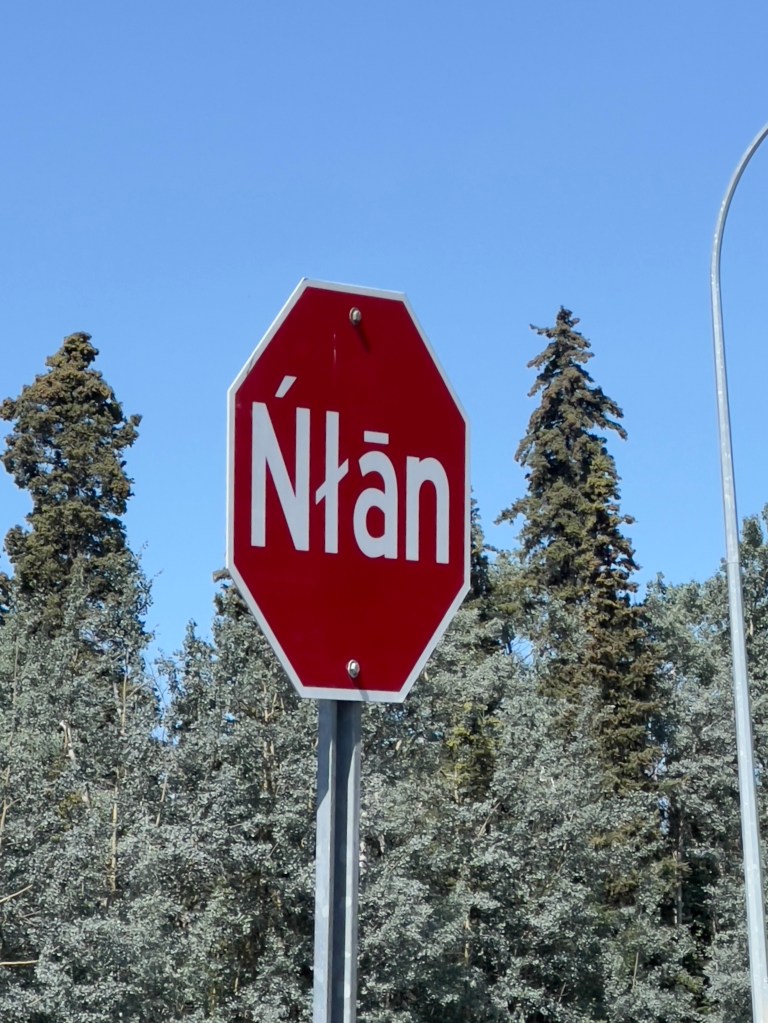
In the Yukon Territory, First Nation’s history is alive, breathing and being kept alive. I felt a part of it vitality. It is evident everywhere including in their traffic signs, This was by far one of my most favorite stops on the Alaska, here we come vacation.
Kluane Lake:
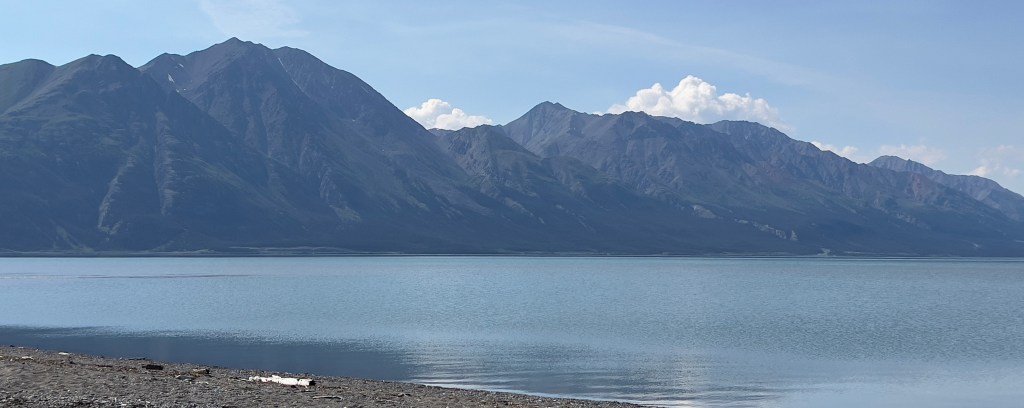
After leaving, we excitedly headed towards Kluane Lake region. I still have vivid pictures in my head from the first time that I saw Kluane Lake in 1977. The enormous lake, 50 miles long, and surrounding mountains give you such a feeling of “smallness” on your part. It is a beautiful blue color though in my memory it was green so it changes. That whole area is just beauty for the eyes.
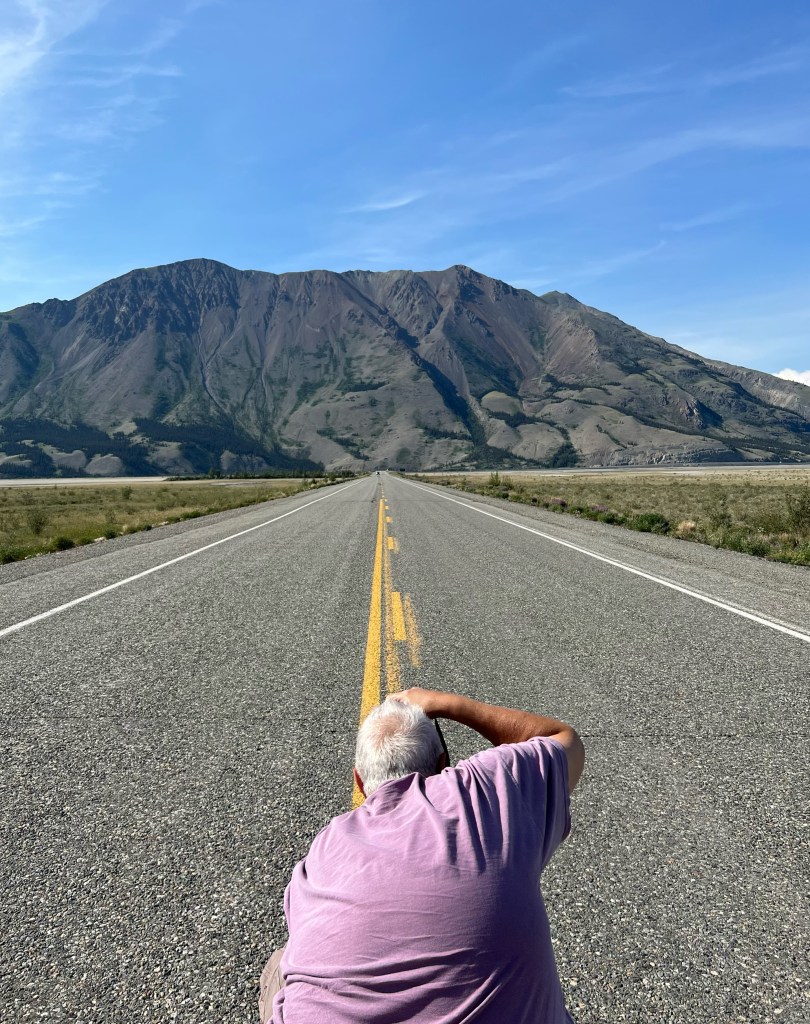


The tall mountain, 6,407 feet ft, formerly known as Sheep mountain is now called as Thechal Dhal by the southern Tuchone people. Sheep mountain goats inhabit these parts and is the only animal we did not see while on vacation. This whole area is a fascinating place to drive through with many picture opportunities. You will pass though a small town called Destruction Bay, who aptly got its name when a storm destroyed buildings and material in the town. Destruction Bay is considered a relay station. Relay stations are places spaced at 100-mile intervals to give truck drivers a break and a chance to repair their vehicles. We did drive a little further to Burwash Landing and got to see the worlds’ largest gold pan before we called it a night.

NIGHT 14: Two miles south of Quill Creek. Goodnight to out out RV camper friends.

DAY 15:
Today was a drive, drive, drive day; and the roads we were driving were rough. We ran into gravel roads, avalanche-destroyed areas, potholes, and frost heaves.

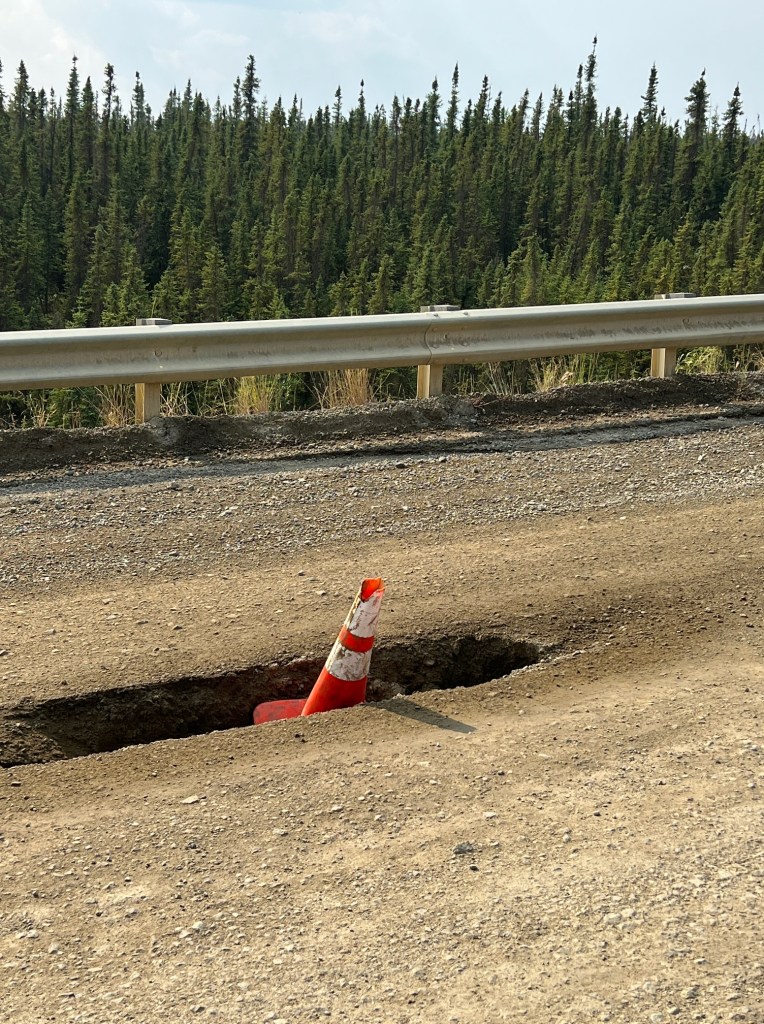
There were red flags posted by many places by the sides of the road indicating that there was a road issue and one should drive cautiously and slowly. At other times, a cone dead center in the pothole is all the warning a driver needs.
SNAG:
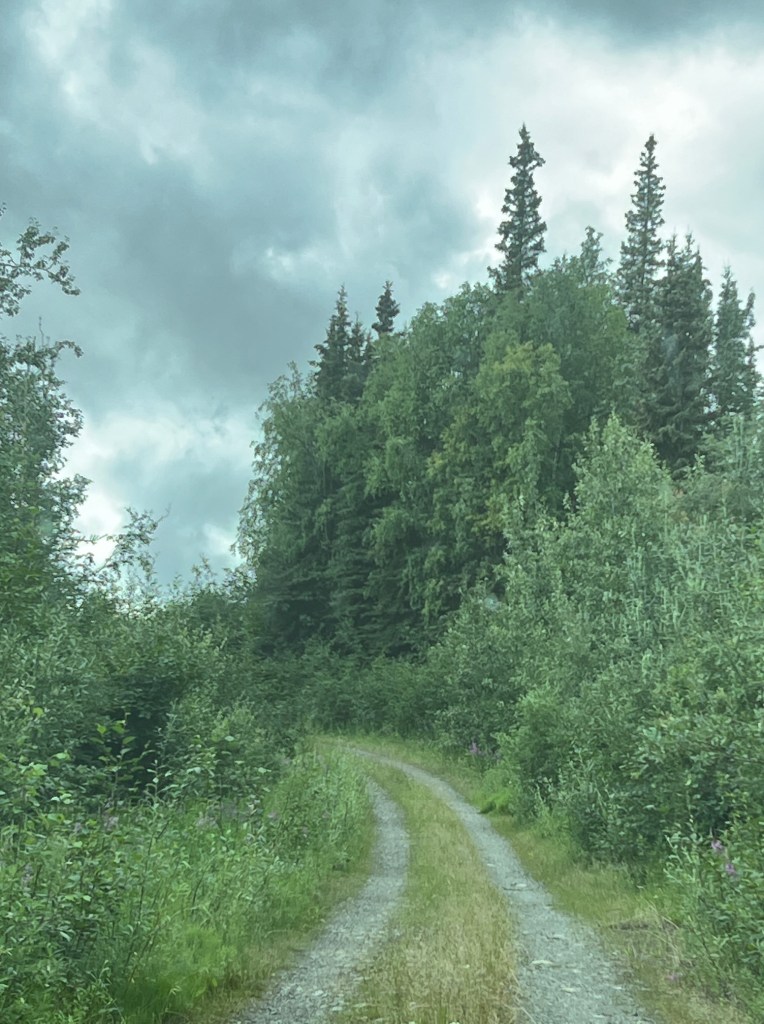
Got adventurous and took a side dirt road to explore an abandoned airstrip in the village of Snag. In 1947, it was santioned as an emergency landing strip for aircraft traveling from Edmonton to Anchorage and Fairbanks, Snags claim to fame is that it hold’s the lowest ever recorded temperature in Canada at -80 degrees Fahrenheit on January 23, 1971. We could only drive in 2.5 miles on the dirt road due to ir becoming too erratic for our vehicle, and did not come across it in that section. May be overgrown with shrubbery and trees. There was a metal shack at 0.5 miles, but nothing else as far as we were able to travel in. Upon further reading, on our return trip ib=n this same area, and after the fact, I discovered that the airstrip now is privately owned, but does get used in the summertime.
We did discover the Kluane River Motel where we had stayed many moons ago in the summer of 1977; it has been resold and the future reminds unknown. There are so many business that have been hit hard over the years due to so many different circumstances.

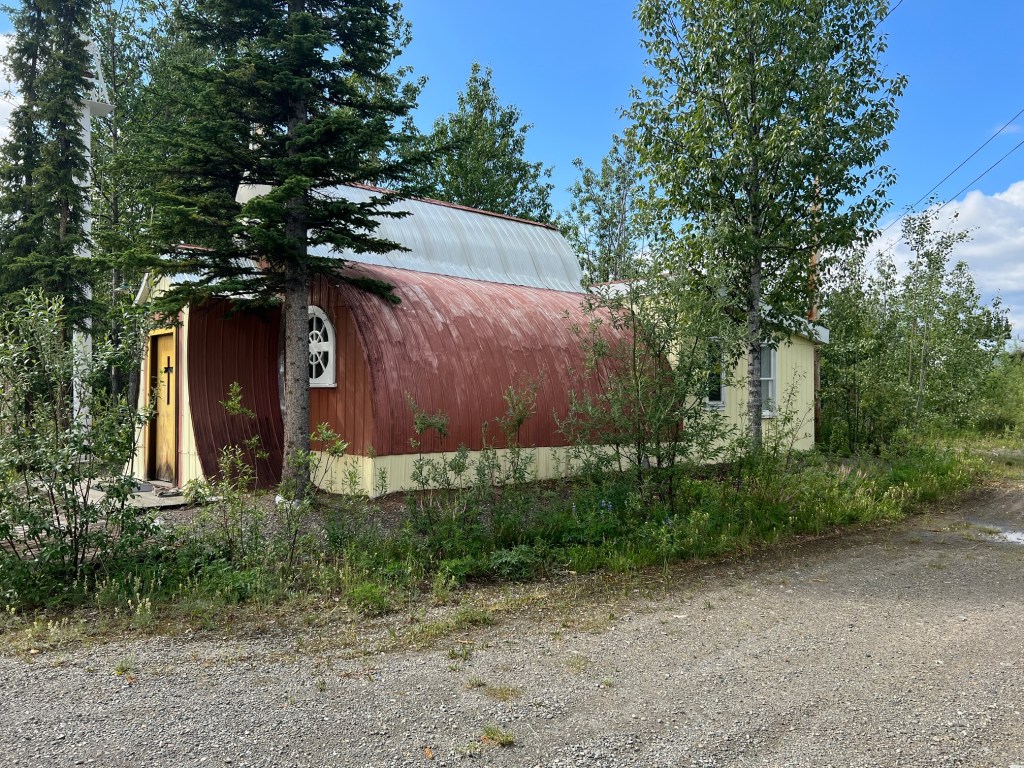
Finally made it to Beaver Creek, the town where the Canadian Border station is located. One of the sites to see while there is the Our Lady of Grace Mission that was built in 1961 from a salvaged Quonset hut left over from the highway construction days.

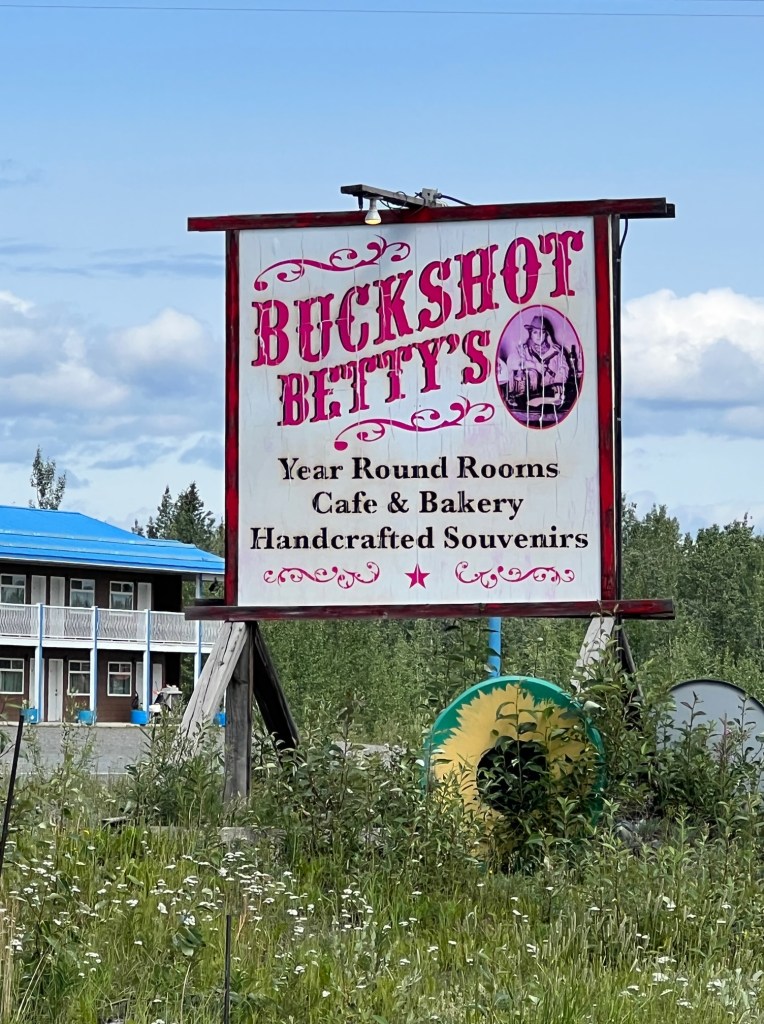
You can also visit Buckshot Bettys for a quick snack, souvenir or even rent a room.
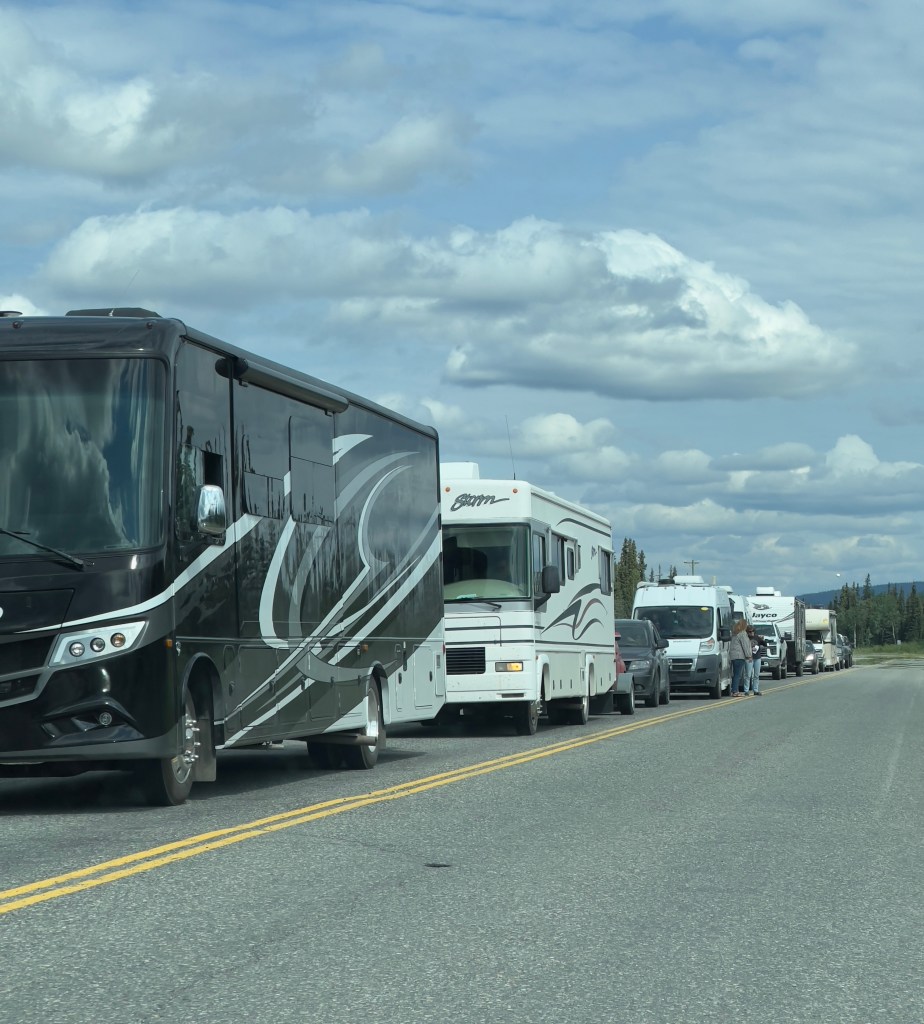
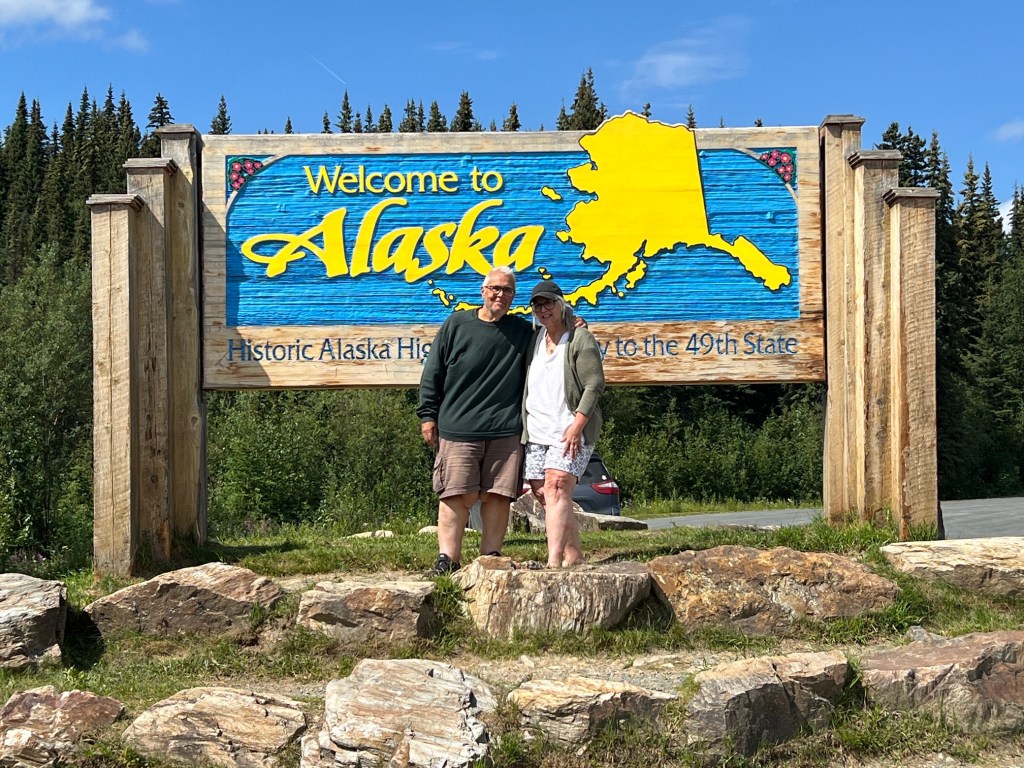
We got through customs into the U.S. with no complications at all. A couple of simple questions, where were we going, how long were we staying, and a “thank you” to my husband for his service; and we were drove through. And just like that, after all those months of planing our trip, it was now – Alaska, here we are after 15 glorious ous days of sightseeing alone the way.

 Two Moro's Travels
Leave a comment