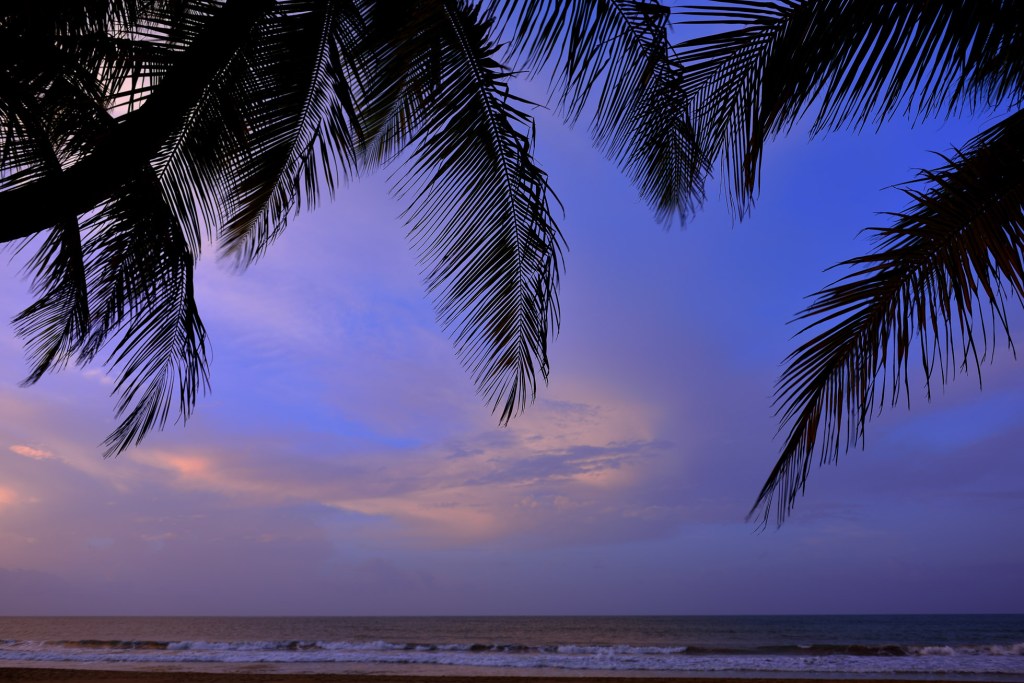
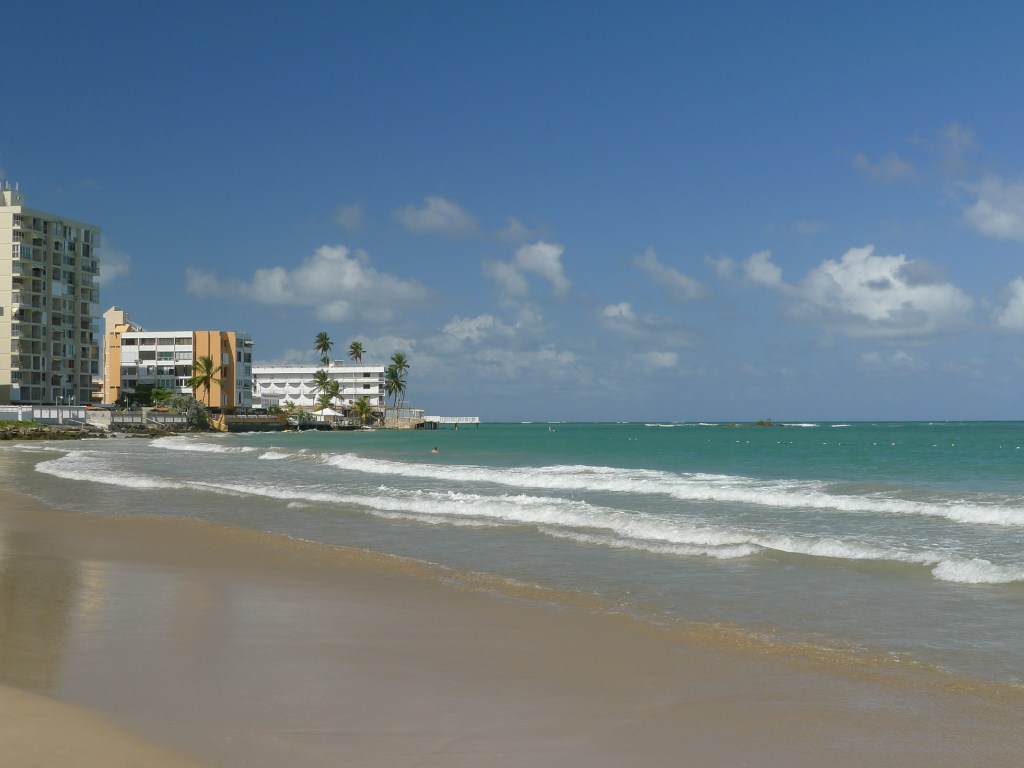
Isla del Encanto. Island of charm. And this enchanting, tropical island paradise located between the Dominican Republic and the Virgin Islands will not disappoint. Geographically it is identified as an archipelago, made up of the main island and over 140 islands, small islets, and cays of which only 3 are inhabited. With the Caribbean Sea to the south and the Atlantic Ocean to the north, its temperatures will range mostly between the 70’s and 80’s year-round allowing you to soak in the sun and immerse in its blue-green water year-round. As inviting as that sounds, though, the humidity is merciless and will wreak havoc on your perfectly straightened hair. Wear a bun; call it a day and hunt for air conditioning opportunities to seek relief.


The Ritz-Carlton PR
Just five minutes from the hotel on Isla Verde, is the Ritz-Carlton PR. We were lucky to discover a great deal on Cheap Caribbean and scored a room for next to nothing. I would like to add a note here that this hotel is currently being renovated due to hurricane damage in 2017 and it will open in the summer of 2022. Check out a Cheap Caribbean for deals and start practicing your high school español.
The Ritz-Carlton PR is luxurious in every aspect, including the pillows, giant marshmallows that cradle you like a newborn. Getting out of that bed felt like leaving behind a lover, but, alas, we had to get up explore the outdoors.
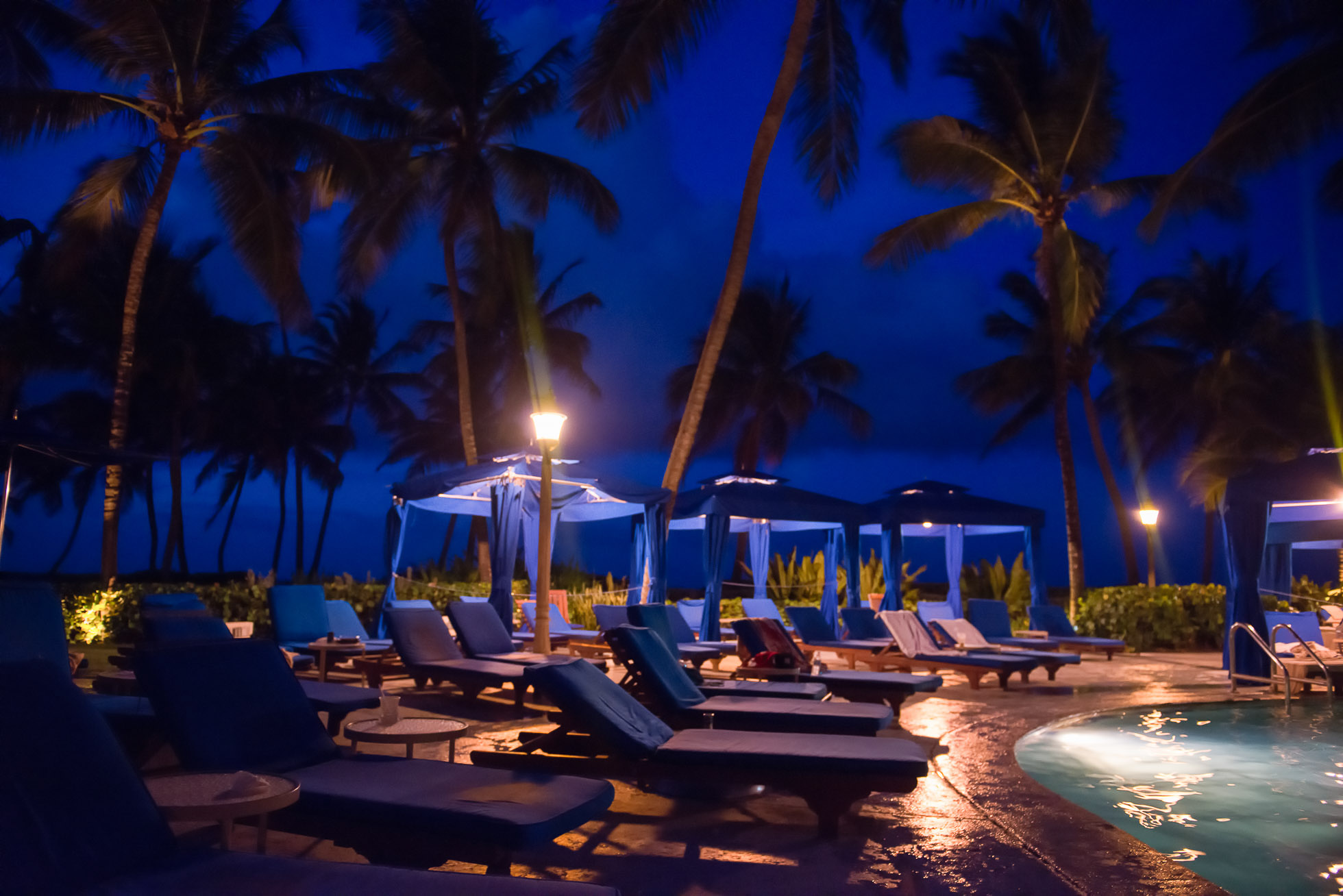
Once outside, tropical plants and sculpted walkways lead you directly to the pool. Here you can relax by tanning yourself or dipping in the pool. There were cabana areas to rent, complete with lounge chairs and a canopy. Available also, were elaborate pavilions that included all the luxuries of the cabana with an additional day bed for lazy afternoon naps; both provided a basket of fruit. This whole area was attended to by employees, I affectionately named, the cabana boys, who were there to service you, I mean provide you with towels for you to dry off with and/ or bring you drinks to quench your thirst. They know you by name, if tipped well enough.
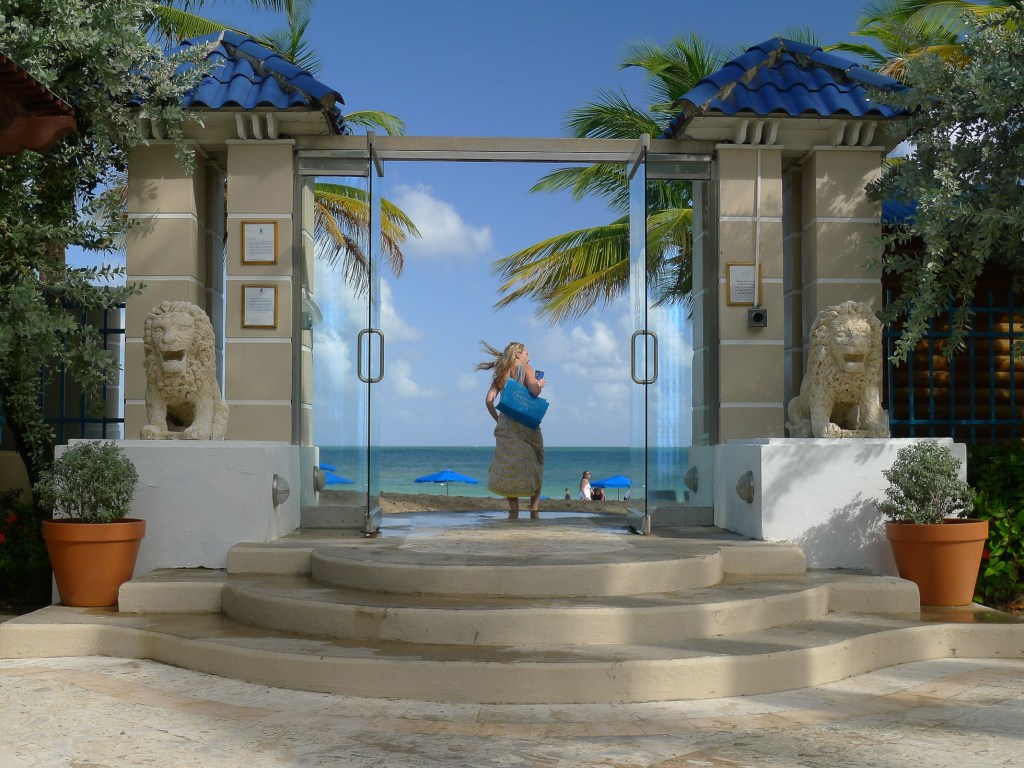
The ocean awaits you as you leave the pool area through a double set of glass doors. Yes, towering doors made of clear glass that led to a palm dotted sandy paradise. Cloth bean bags nestled under a few select palm trees provided shade from the sun, as well as more lounging chairs.
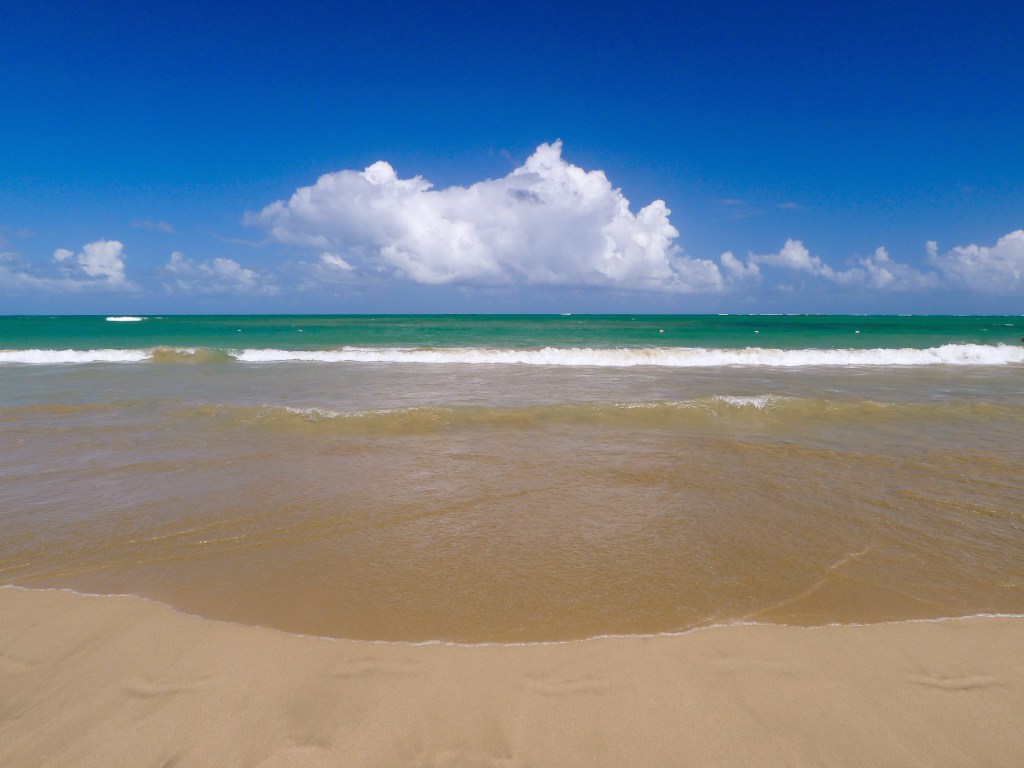
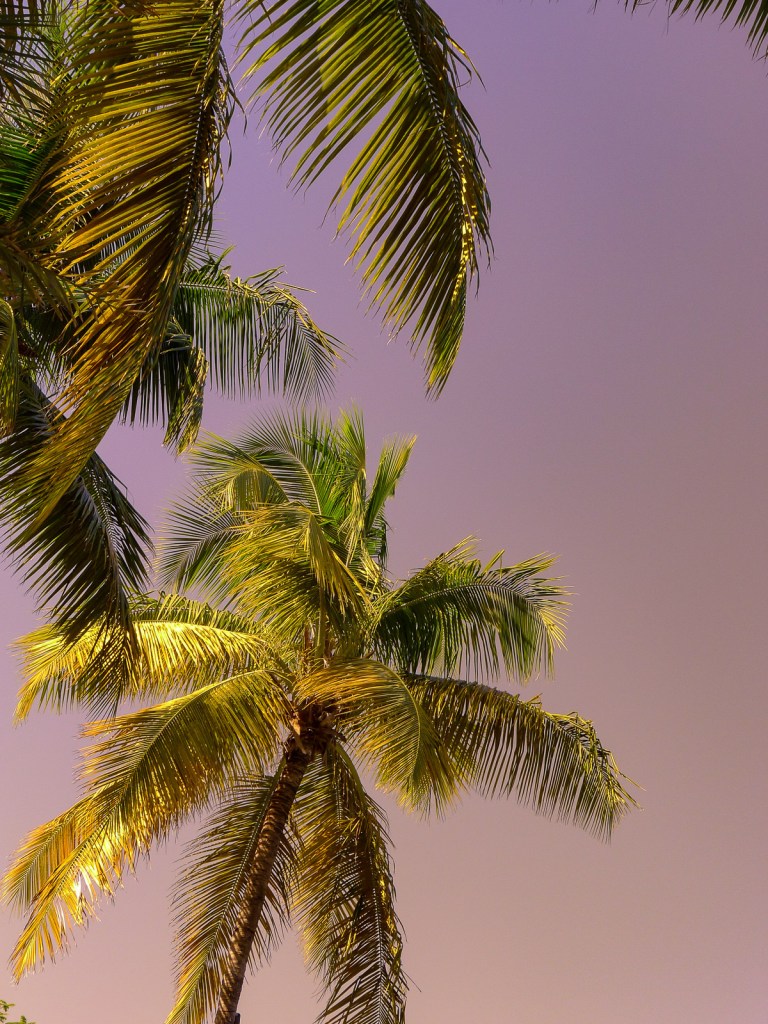
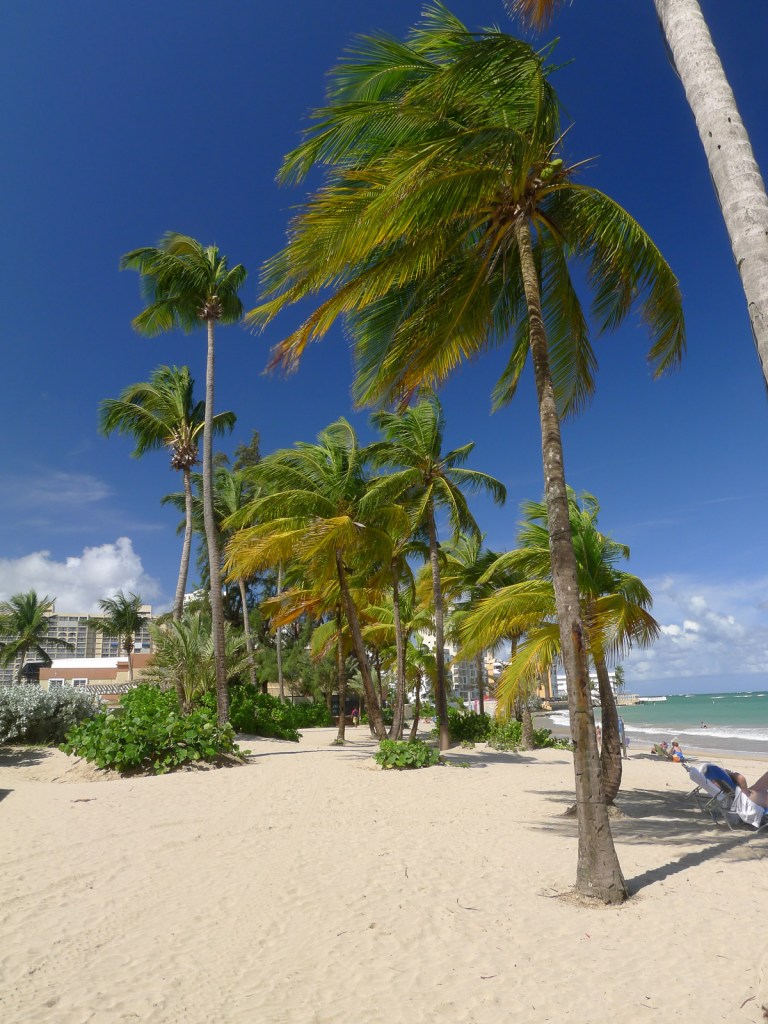
Though the hotel was spectacular, the restaurants in the hotel were pricey and served food that were not calling our name. Some of the choices were: tuna tartar and American wagyu burger. We opted not to eat there and chose a local favorite.
EL Metropol.
Not only are Puerto Rico and Cuba Caribbean neighbors, but their cuisines have merged, and the result is evident in the emergence of the Metropol restaurant. A must place to eat. When my husband visited Puerto Rico on a business trip, a local merchant took him there declaring it “the best restaurant on the island.” I can attest that it is a gastronomic delight for your taste buds. Cuban and Puerto Rican food at a reasonable price for the traveler. We spent 5 days on the island and ended up eating there 3 out of the five days. So, definitely, a must visit if you like Hispanic food.
El Yunque National Park (Rain Forest)
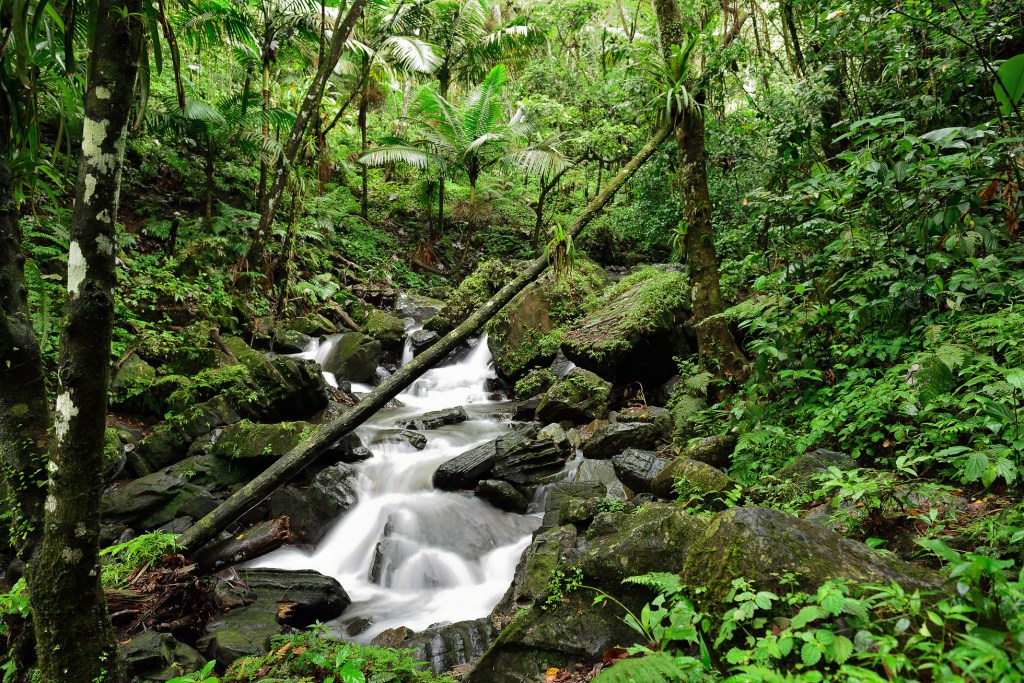


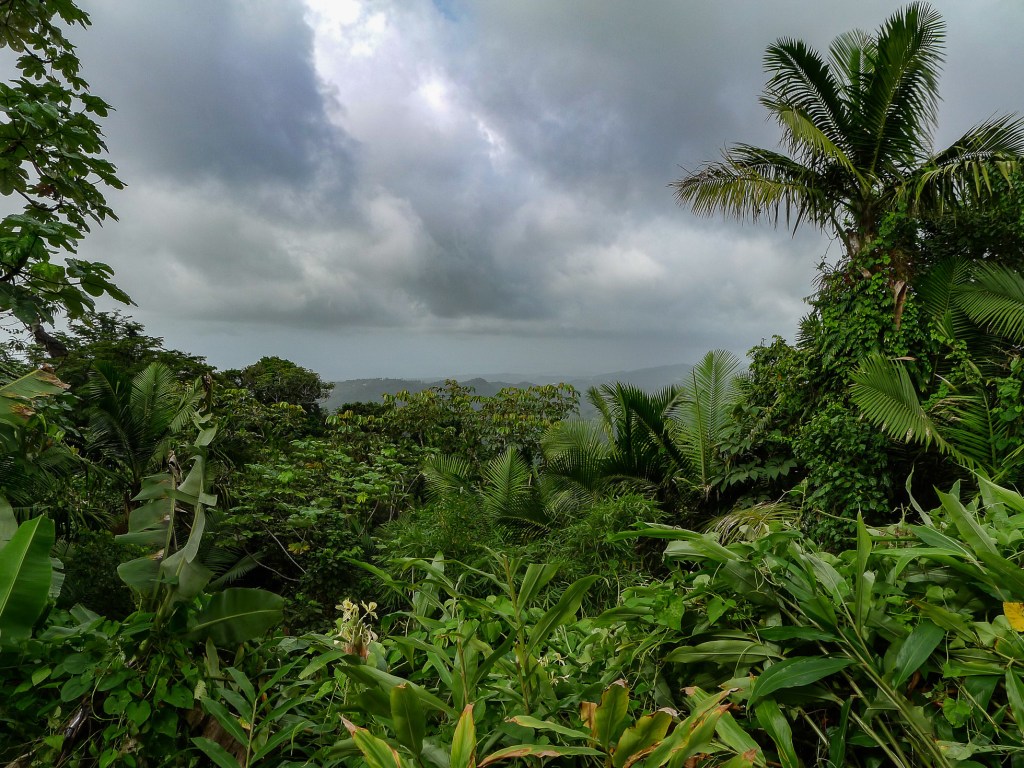
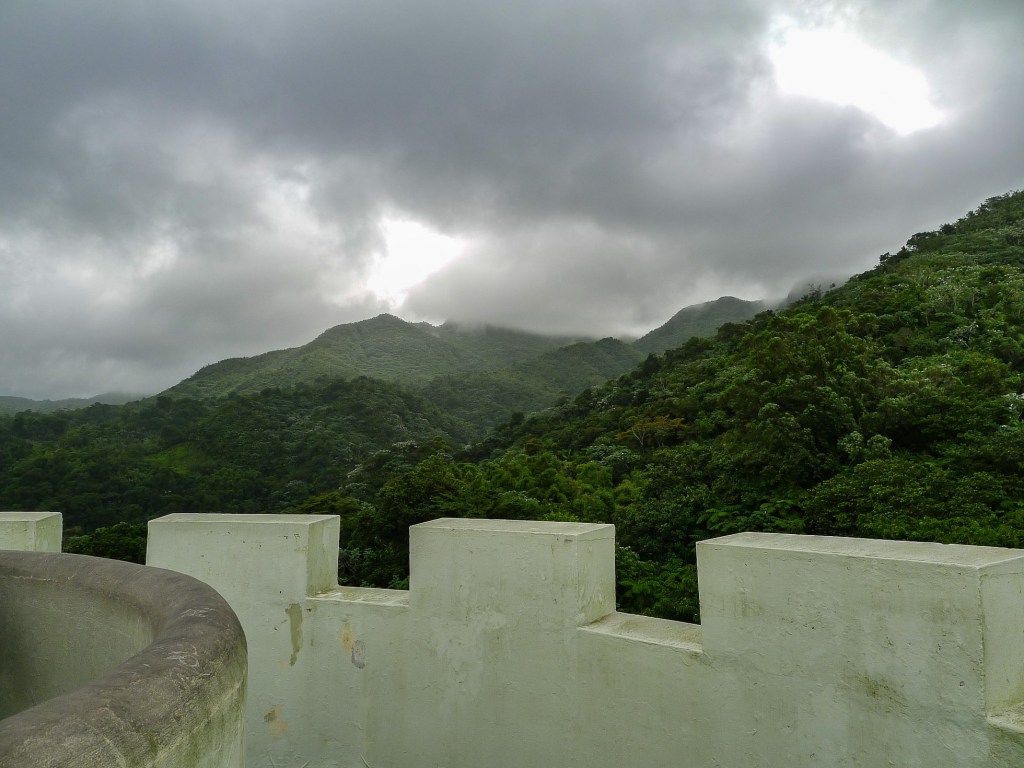
El Yunque is a must-see since it is the only tropical rainforest in the U.S. National Forest Service. Compared to others, it is small in size, but biologically very diverse. As a mountain tropical forest, there are many streams and creeks and small cascades to photograph. If you are lucky, you might catch a glimpse of the tiny coqui frog. An interesting fact: due to the humidity and location, it rains so often in the El Yunque that there is no standing water, therefore, no mosquitos. You are encouraged to wear insect repellent, but discouraged from immersing in any water source with it on. Suggestion: spray the outside of your clothes only, if you plan to take a dip to cool off. Always respect the delicate ecosystems of the places you visit.
Entry tickets are required for some areas of El Yunque, so plan ahead. https://www.fs.usda.gov/main/elyunque/home
Old San Juan




The Capital Area
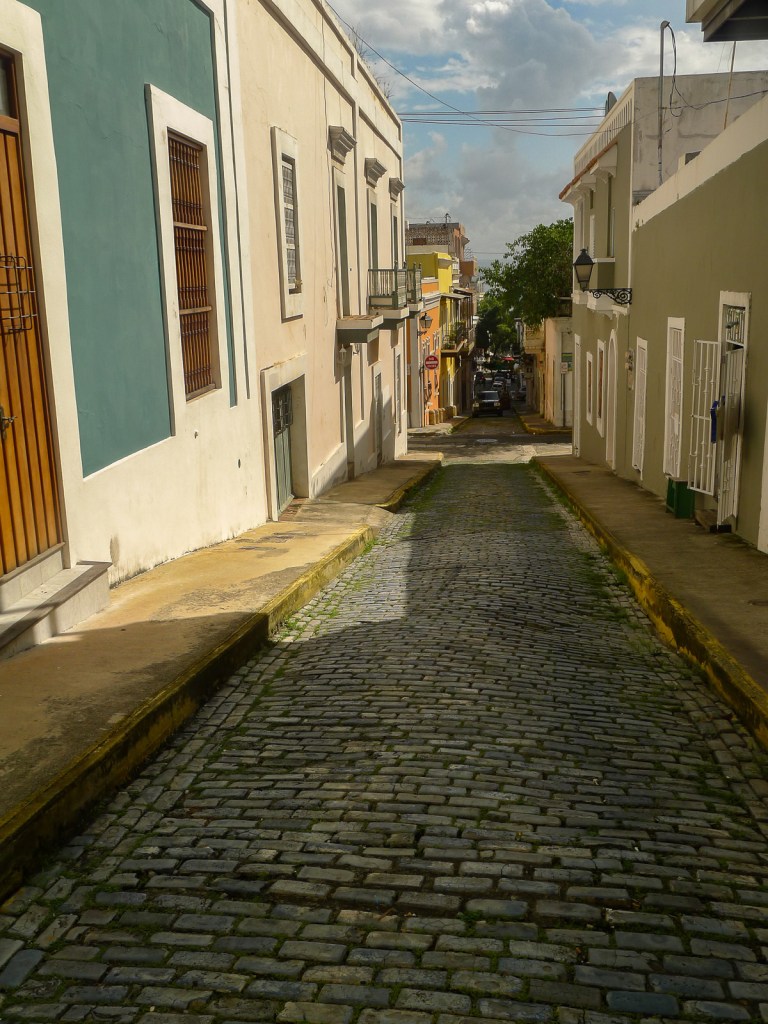
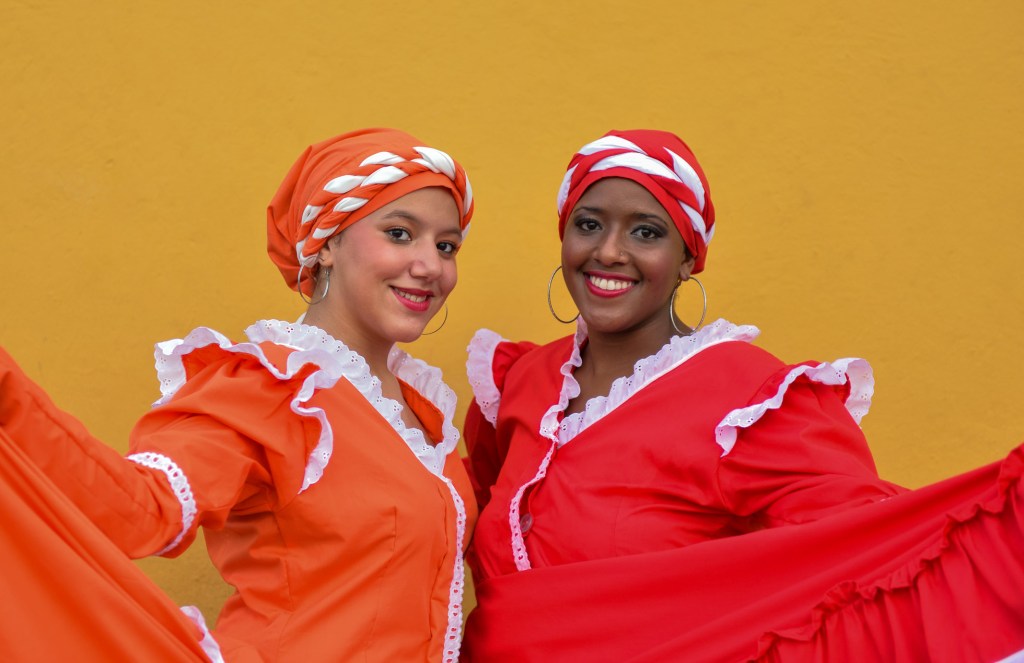
Viejo San Juan. Old San Juan. Known for its rich history, culture, and color.
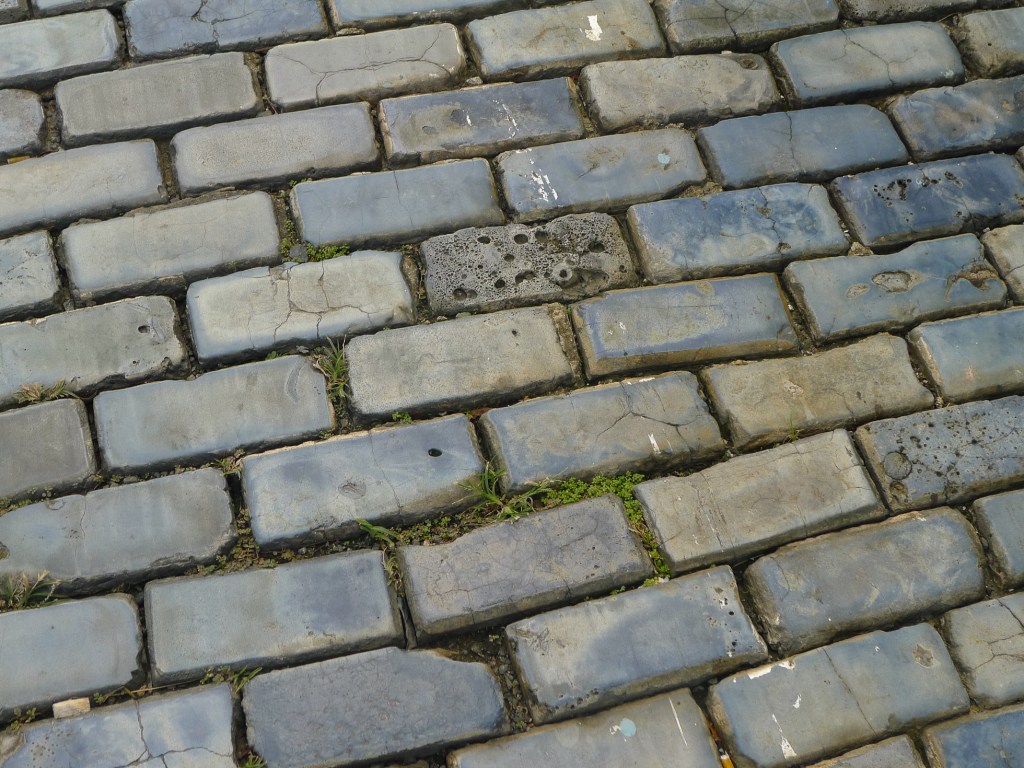
Narrow, cobblestones streets guide you through the city of this small islet that is connected to the main island by 3 bridges. An interesting fact is that these cobblestones were made of the leftover iron smelting waste that had been cast into stones. They were then used as balancing counterweights at the bottom ships coming here from Spain. Discarded here; the weight was then replaced with gold and other resources that were taken back to Spain. Due tot he material they were made from, they have a blue hue to them. Unfortunately, these cobblestones used since 1784 are being replaced with more modern ones.
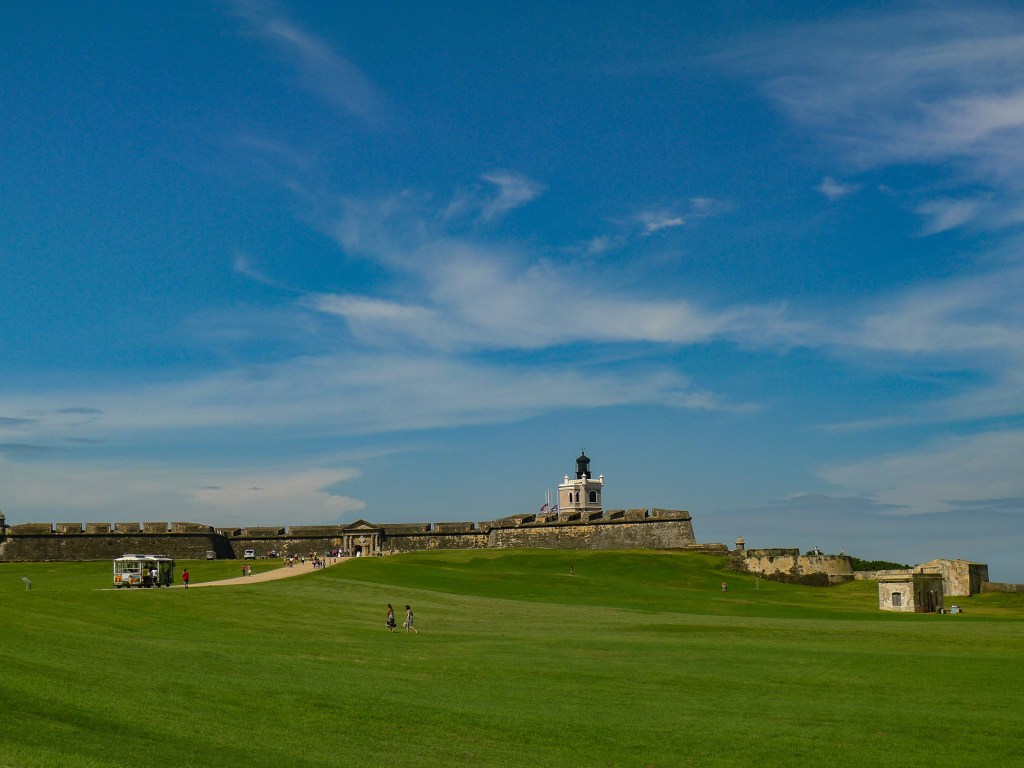
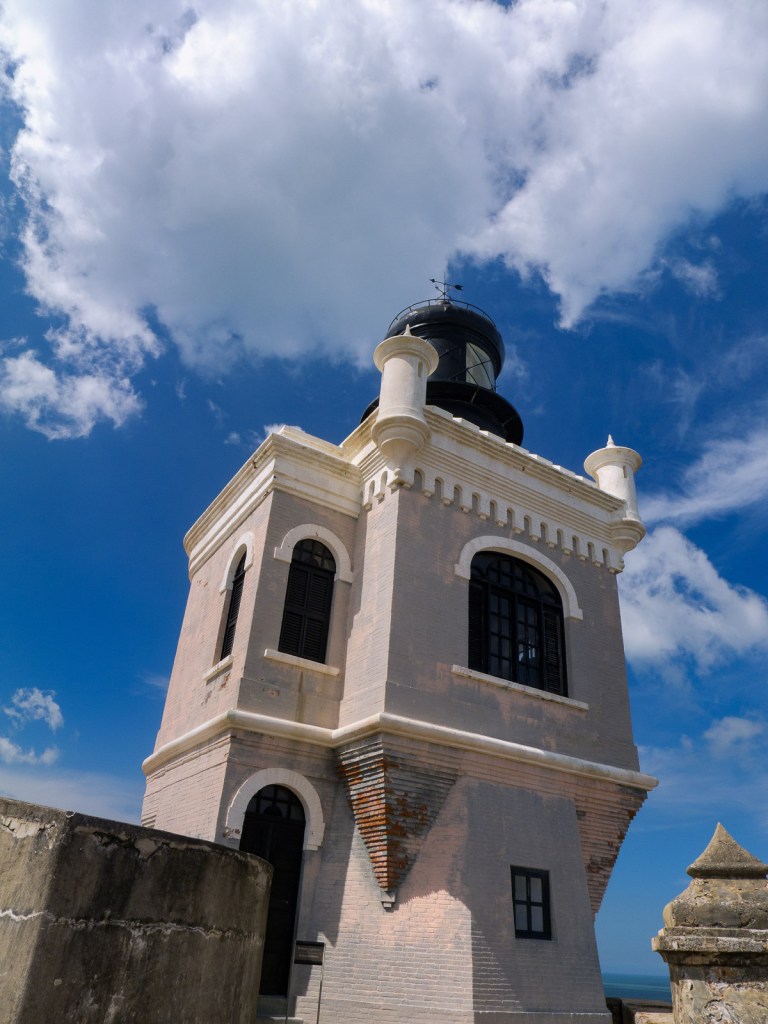
This downtown area provides many places to eat. I recommend eating small portions and trying a variety of different places. Be warned that cruise ships do dock here, and it can get busy. There are benches around the area to sit and take in the sites. Make sure to allot some time to spend at Castillo de San Felipe de Morro, simply referred to as el Morro. It is a great place to wander and take pictures especially as the sun starts to set. The paint-peeling fort walls add beauty as well as color and serves as a beautiful background to the blue-green ocean. We had the pleasure of shooting a destination wedding here several years ago. The results as you can see are exquisite. El Morro is considered a National Historic Landmark District and is on the UNESCO world heritage site list. It has served as active US military base during 2 world wars.
La Perla and the Cemetery Area


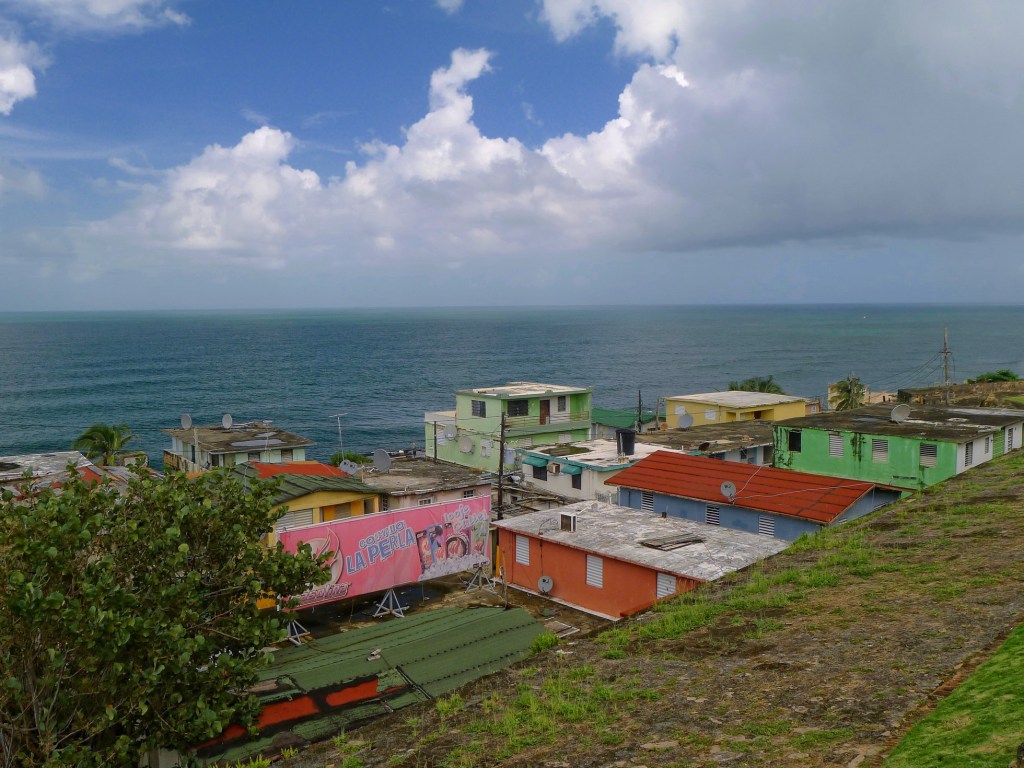
La Perla
Located near Fort San Cristobal fort is la Perla. You might recognize it from the video “suavecito, the Reggaeton, music video by Luis Fonsi featuring Daddy Yankee. https://www.youtube.com/watch?v=kJQP7kiw5Fk
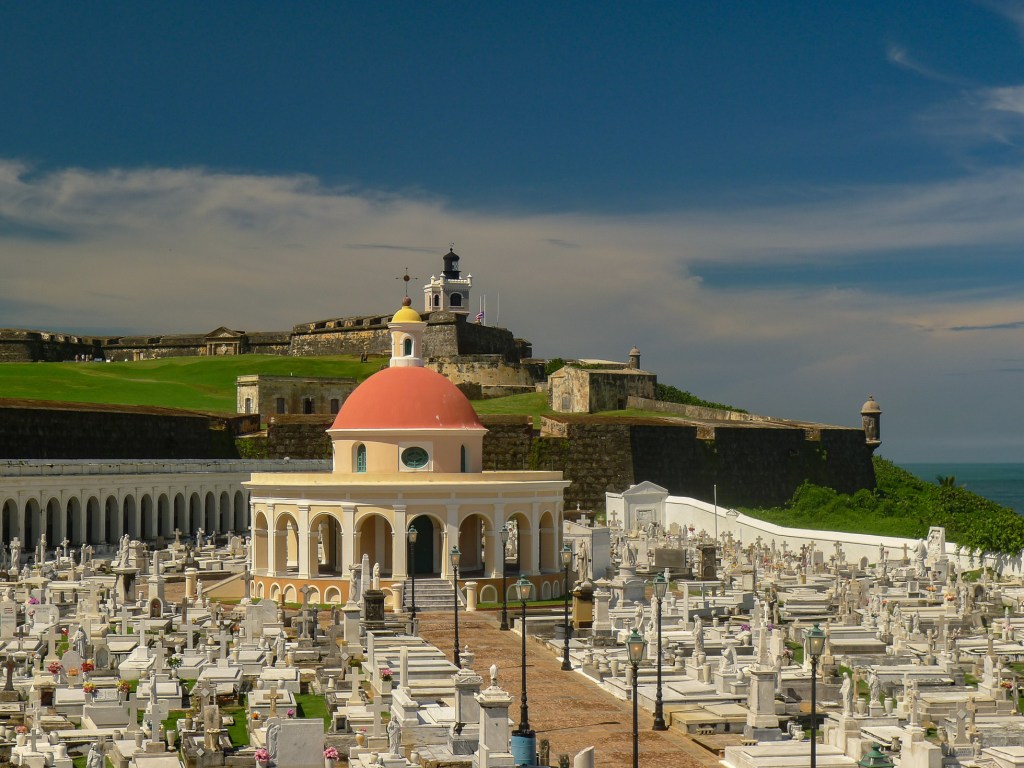
The area known as La Perla today used to be the location of a slaughterhouse called “el Matadero” that was built outside the city limits. Cemeteries were not permitted to be built in city areas and it is visible to the left of la Perla. Instead of traveling to and from, workers in these areas built simple barrios to live in while they worked here. Homeless people and slaves had to live outside the city walls, and they made this town theirs. History is at times a sad reminder of events, but the area today is being renovated: houses have been painted, restaurants are open, and it is a beautiful colorful little area with the sparkling Caribbean as its backdrop.
This area has 4 access points, one near the cemetery and 3 via Calle Norzagaray. We never visited it; a local taxi driver advised us against it. We didn’t enter. My last gaze was looking down at a little girl sitting on a porch in La Perla. I still to this day think about her.
Plusses: the atmosphere, the music, the food, the architecture, the color, no need for a passport to travel there.
Minuses: The humidity. Cost. Things can be expensive. Language: some local places speak only Spanish; this is the time to “practica español.” Safety: when traveling to any new, unknown place, be aware of your surroundings to stay safe. The humidity. Did I mention the humidity?

 Two Moro's Travels
Leave a reply to Tina Moro Cancel reply